

The real value of link building is straightforward: quality links help your site earn visibility, trust, qualified traffic, and durable growth. A link from a relevant, credible page works like a recommendation that search engines and people can both understand.
Search engines use links as signals of relevance and credibility because they show that other websites consider your page worth referencing. For a new or growing site, that can often mean faster discovery, stronger ranking potential, and a better chance of competing with established brands when the site also has useful content and sound technical foundations.
However, link quality matters far more than link volume. A mention from an industry publication, partner page, resource guide, or useful PR story can support rankings, referral traffic, brand awareness, and even broader search visibility over time. Cheap, irrelevant, or manipulative links can create risk instead.
What Link Building is and Why is it Needed?
Link building is the process of earning links from other websites to your own pages. Those links create pathways for people and signals for search engines. When credible, relevant sites point to your content, Google has more reason to see that page as useful, trustworthy, and connected to the topic.

That is why link building matters beyond a simple backlink count. High-quality links can support stronger search engine rankings, more organic traffic, referral traffic from relevant audiences, faster discovery and indexing, and better brand trust. For a new or growing website, a mention from an industry publication or partner page can help search engines understand the site while putting the brand in front of people who already care about that market.
Not all links carry the same value. A relevant link from a respected industry source is very different from a random, low-quality backlink placed only to manipulate SEO. The benefits come from relevance, authority, and context, not volume alone.
Higher Rankings and Stronger Organic Visibility
High-quality links can improve search engine rankings because they act like third-party validation. Another relevant website is willing to point readers to your page, which can strengthen the perceived credibility of that content. Google does not treat every backlink equally, but links from trusted, topical sources can support the relevance of specific pages.
That ranking lift is what turns link building into organic visibility. If a product guide moves from page two to the top half of page one, you may gain more than a better position. You can gain more impressions, more clicks, and more chances to attract qualified leads without increasing paid search spend.
Link scenarioRanking impactVisibility outcomeBest use caseRelevant industry backlink to a key pageStrong page-level signalHigher organic traffic potentialCompetitive service pagesLinks to a topic-cluster articleBuilds topical authorityFuture content may rank easierBlogs, guides, resourcesPR mention with contextual linkTrust and awareness signalMore branded search demandGrowing brands
For a new website, strong links can shorten the credibility gap. For an established site losing rankings, better links can support recovery when combined with content improvements, internal linking, and technical fixes.
More Referral and Organic Traffic
Better rankings matter because they create more chances to earn organic traffic from people already searching for what you offer. If a product comparison, service page, or guide moves from page two to page one, the traffic gain can be meaningful because search intent already exists.
Referral traffic works differently. It comes directly from the page that links to you, such as an industry blog, partner resource page, digital PR article, supplier directory, podcast notes, or niche newsletter archive. These visitors may not have found you through Google, but they arrive with context. Someone reading “best accounting tools for SaaS startups” and clicking through to your software page is usually warmer than someone coming from a broad, untargeted mention.
That is where link quality shows up in business terms. A relevant backlink can support qualified leads, assisted conversions, stronger sales conversations, and, over time, less pressure on paid search when organic and referral traffic become more dependable.
- Qualified leads from audiences already interested in your category.
- Assisted conversions when visitors discover you, leave, then return later through branded search.
- Sales conversations because a trusted third-party source introduced your brand first.
- Less pressure on paid search and CPC campaigns as organic and referral traffic become more dependable.
Not every referral visit converts immediately, and links should not be treated as a guaranteed replacement for paid media. The strongest result usually comes when link building, content strategy, conversion tracking, and paid acquisition support each other.
Builds Authority, Trust, and Brand Credibility
Authority grows when respected sites repeatedly connect your brand with a topic, product category, or problem you solve. A backlink from a relevant industry publication, partner resource page, association site, or expert roundup does more than pass SEO value. It tells readers, prospects, and search engines that your website belongs in that conversation.
Metrics like domain authority and other site scores can be useful, but they are proxies, not the goal. The real outcome is trust. If a growing cybersecurity company earns links from security blogs, SaaS review resources, and conference pages, buyers are more likely to recognize the brand before a sales call. That recognition can make lead generation easier because the company no longer feels like a random result in Google.
High-quality links also support thought leadership. When your research, guides, tools, or commentary get cited by credible sources, your content becomes part of the industry’s reference layer. Over time, that can improve brand awareness, industry visibility, and credibility in ways that on-site SEO cannot create by itself.
Helps Search Engines Discover and Index Pages Faster
Links do not only pass authority; they create new routes for search engines to find your pages. When Google crawls a trusted industry blog, news article, partner page, or resource list that links to you, that backlink can lead its crawler to content it may not have discovered as quickly through your sitemap alone.
This matters most for new websites, newly launched sections, and deep pages that have limited internal or external signals. A fresh research report, product comparison, or topic-cluster guide that earns links from relevant pages has a better chance of being discovered, crawled, and considered for indexing sooner.
That does not mean every linked page gets indexed instantly. Crawlability still depends on technical basics like clean internal linking, no accidental noindex tags, fast-loading pages, and accessible content. If indexing is a recurring issue, review your technical SEO foundations first technical SEO. High-quality links can then give search engines stronger reasons to revisit your site and evaluate new content.
The practical benefit is speed and coverage. Your best pages are less likely to sit unnoticed, especially when they are supported by links from sites Google already crawls regularly.
Creates Long-term SEO Value That Compounds Over Time
A strong link profile can keep paying off long after the first backlink is earned. Unlike a CPC campaign that stops producing traffic when the budget pauses, high-quality links can continue supporting search engine rankings, organic traffic, and brand visibility for months or years, as long as the linked content stays relevant.
The compounding effect is clear in topic clusters. Say your guide to “enterprise data backup planning” earns links from software review sites, industry blogs, and a partner webinar page. That authority does not only help one guide. With smart internal linking, related future content, such as comparison pages or implementation checklists, may gain traction faster because the website has stronger credibility around the topic.
Domain authority and similar metrics are imperfect, but they can show whether your site is becoming more trusted relative to competitors. Over time, that can mean lower dependence on paid search, better ROI from content, and a competitive advantage that is hard for newer sites to copy quickly.
Supports Partnerships, PR, and New Opportunities
Link building often starts as an SEO activity, but the best campaigns create relationships you can use beyond backlinks. A guest contribution, expert quote, podcast appearance, research mention, or partner resource page can put your brand in front of people who already trust that publication or company.
That visibility can lead to practical business outcomes such as partnerships, PR coverage, referral traffic, and new business opportunities.
- Partnerships with complementary brands that serve the same audience.
- PR coverage that increases brand awareness and industry visibility.
- Invitations to webinars, podcasts, roundups, and expert panels.
- Qualified referral traffic from niche pages with real buying intent.
- New business opportunities from companies that discover your content through trusted sources.
For example, a cybersecurity software company earning links from compliance blogs, SaaS newsletters, and industry reports is not just improving SEO. It is also building thought leadership with CISOs, consultants, and procurement teams who may influence future sales.
These relationships create a useful feedback loop. The more your brand appears in credible industry spaces, the easier it becomes to earn future mentions, links, collaborations, and trust. For campaigns built around data, expert commentary, or newsworthy assets, digital PR can make link earning more credible and repeatable digital PR.
How to Earn Links That Deliver These Benefits
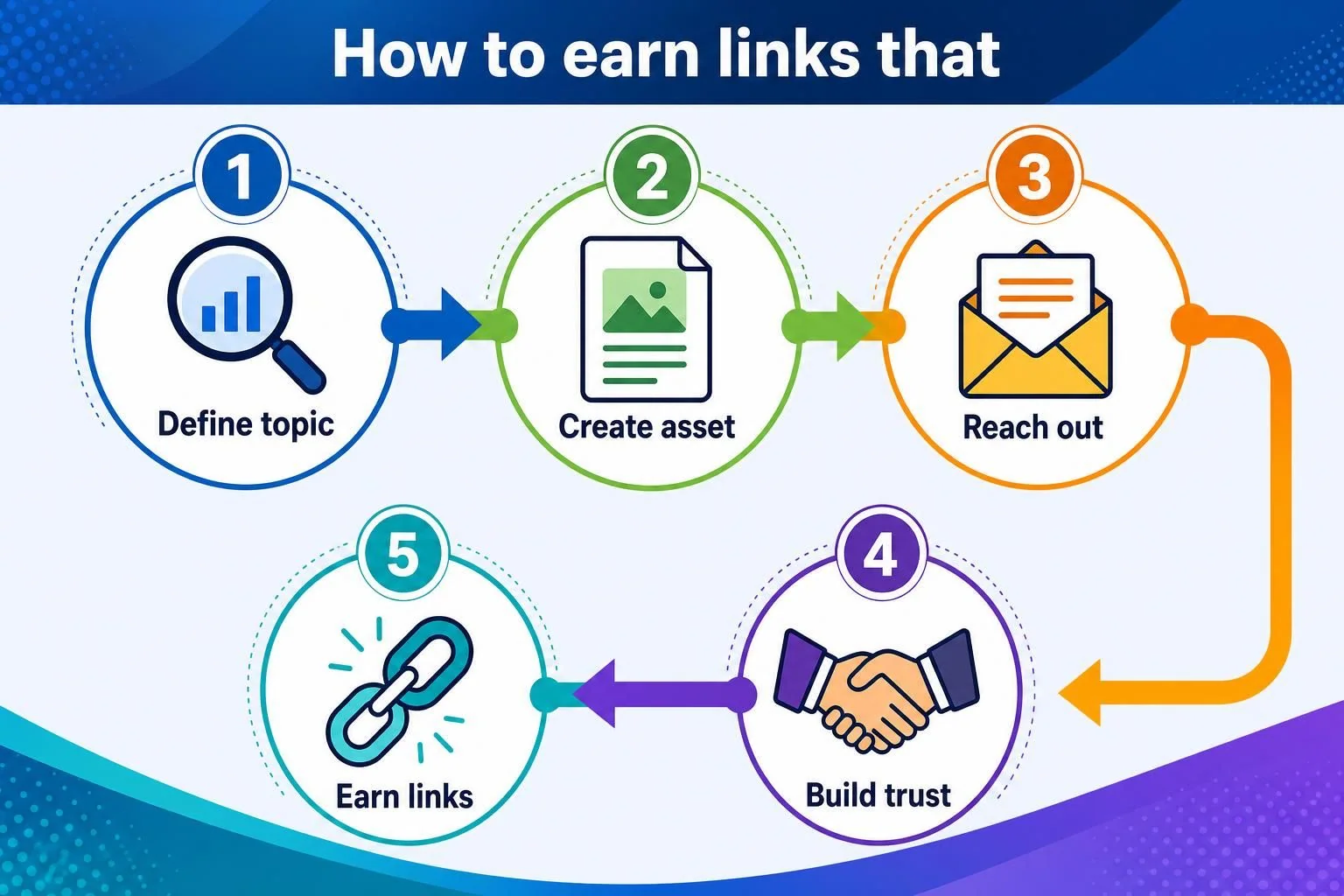
Focus on Relevance and Quality
The links that deliver real SEO and business value usually come from pages your audience, competitors, journalists, or partners already trust. A high-quality link is relevant to your topic, placed naturally in useful content, visible to readers, and connected to a website with credible editorial standards.
A practical link earning process includes these steps.
- Identify pages worth promoting, not just pages you want to rank. Prioritize original research, comparison guides, expert explainers, tools, data studies, templates, or strong opinion pieces that give another site a real reason to cite you.
- Map each page to likely link sources. A new B2B software website might target niche newsletters, integration partners, industry associations, customer resource pages, and expert roundups before chasing national media.
- Personalize outreach around the publisher’s audience. Explain why your resource improves their article, supports a claim, updates an old statistic, or gives readers a better next step.
- Build repeatable relationships through guest contributions, digital PR, podcast appearances, partner content, community participation, and expert commentary.
- Track outcomes beyond backlink count, including rankings, organic traffic, referral traffic, conversions, crawlability, indexing, and assisted revenue.
Promote pages with a clear business purpose, strong search intent, and something worth citing. If not, improve the asset before outreach.
Avoid Manipulative Tactics
Bad link building creates risk instead of momentum. Avoid paid link networks, mass guest posts on irrelevant sites, automated outreach blasts, private blog networks, large-scale link exchanges, and exact-match anchor text patterns that look engineered.
Google is better at discounting low-value backlinks, and manipulative tactics can also damage brand trust. They do little for AI search or LLM search visibility, where credible mentions, topical authority, and consistent industry visibility may matter more than artificial link volume.
Call a professional when you need strategy, not just a prospect list. Useful support may include competitive gap analysis, digital PR angles, linkable asset planning, recovery from toxic tactics, or a campaign tied to lead generation and revenue.
The practical next step is simple: review the links you already have, compare them against competitors, and identify the pages or topics where stronger authority would support rankings, leads, or sales. Then build a focused campaign around content, PR, partnerships, and useful assets people genuinely have a reason to cite.