Aomark Hub · Updated September 28, 2026
Give an AI writer a focused reader question and source-backed facts, then review every claim before the draft reaches WordPress.
Define one reader and one useful answer
Search results for AI blog post writers commonly present writing tools and generated-post features. A clear brief helps you judge whether the draft answers a real reader question instead of merely repeating a keyword. Define the reader, the question they need answered, and what a useful next step looks like. Keep the topic narrow enough for one article to answer it well.
- Write a one-sentence description of the intended reader.
- State the question the article should answer and the action a reader may take afterward.
- Remove secondary topics that would require a separate article or a different audience.
Give the writer evidence and boundaries
Collect the facts the article may rely on before drafting: names, dates, figures, service details, definitions, and links to reliable source material. Mark which details are confirmed and which need a source or subject-matter review. Add the limits that affect meaning, such as eligibility, exceptions, uncertainty, or conditions. A writing tool can organize supplied information, but its phrasing is not evidence that a claim is true.
- Gather the source material that supports the article's important claims.
- Separate confirmed details from questions that still need an answer.
- List qualifications and unsupported promises the draft must not introduce.
Choose a structure that serves the question
Plan a short outline around the reader's decision or task. Put the direct answer early, then order sections so each resolves a likely follow-up. For example, a service explainer might cover what the service includes, when it applies, what affects timing, and how to request an assessment. Use headings to organize those answers rather than to force the same keyword into every section.
- Write the main answer before choosing headings.
- Add only the sections needed to explain steps, limits, and next actions.
- Check that the outline does not promise details absent from your source material.
Review the draft against the brief
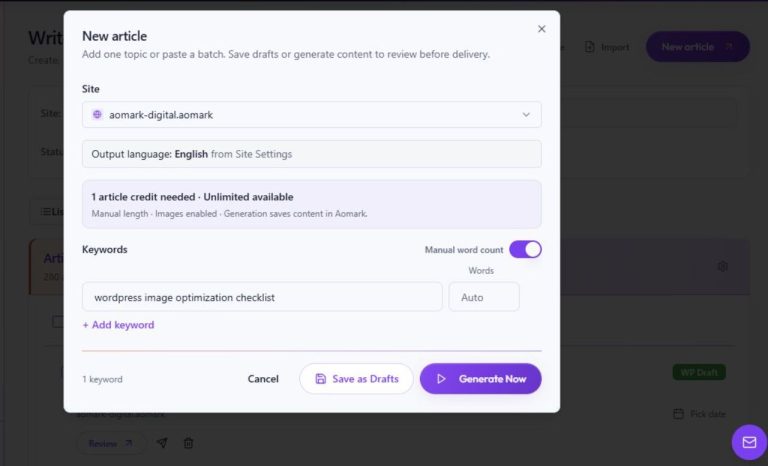
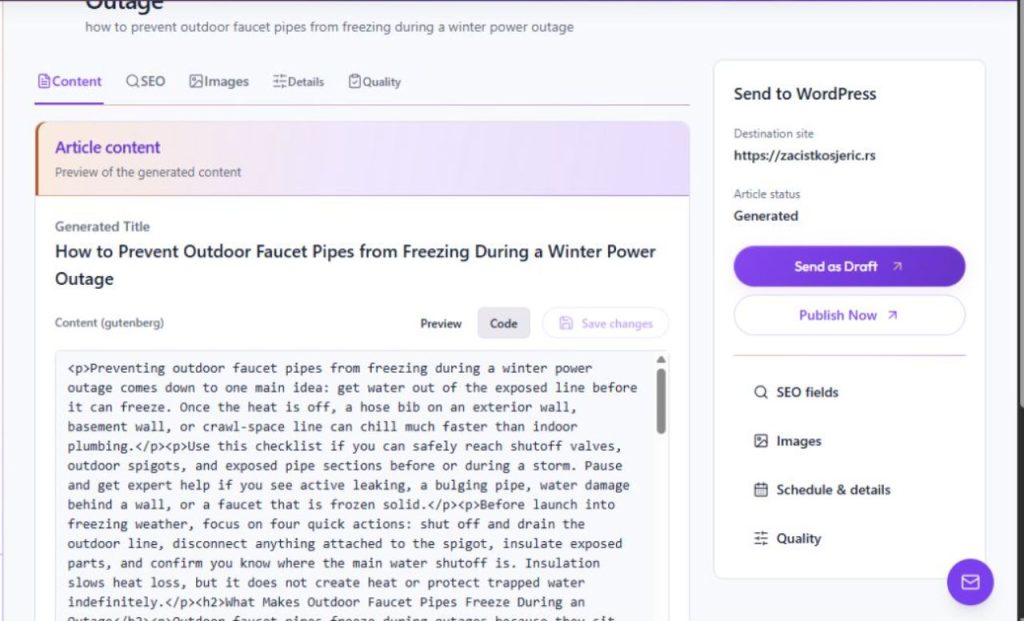
After Writer creates a draft, compare it with the brief and source material. Check each name, number, date, definition, recommendation, and implied guarantee. Remove unsupported specifics, restore missing qualifications, and rewrite passages that sound confident while leaving the reader without a clear answer. The Writer tutorial for reviewing and editing generated content explains its article editing controls; this guide focuses on the evidence and scope standard to apply.
- Read the full draft and mark claims that require confirmation.
- Verify each marked claim against its source, then correct or remove unsupported wording.
- Check that the opening, headings, and conclusion answer the same reader question.
Use the draft as a reviewed starting point
Once the article meets the brief, check the intended site and relevant article details before choosing a WordPress outcome. Keep editorial approval separate from generation: a generated draft should not be treated as an approved public article. See the existing Writer tutorials for the controls to edit content and send a reviewed article as a WordPress draft.
- Confirm that the article answers the brief and includes no unverified claims.
- Check its destination and review details using the relevant Writer tutorial.
- Choose a draft or publication outcome only after the responsible reviewer approves it.
Continue with a focused tutorial
Review and edit generated Writer content
Run a quality check on a Writer article
Further reading
Google Search guidance on AI-generated content